
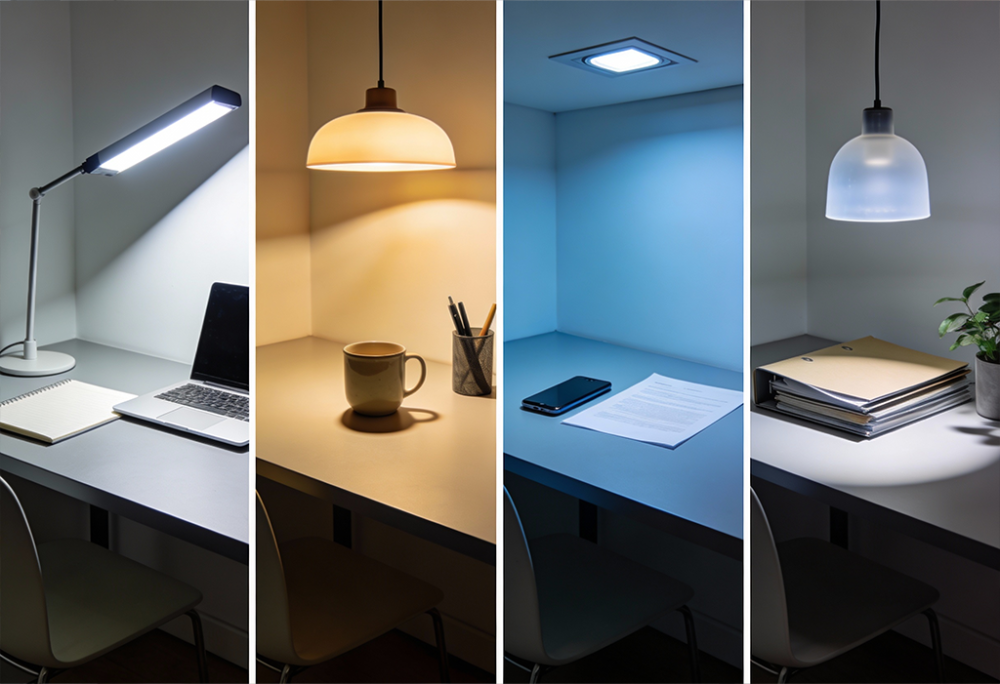

Office lighting is one of the most essential elements in modern workplace design. It not only provides illumination but also directly contributes to employee well-being, boosts productivity, and reflects the professional identity of the office.
However, lighting needs vary between open-plan offices, which rely on large shared spaces, and private administrative offices, which require more privacy and atmosphere control.
Challenges of Lighting Administrative Spaces
Designing lighting systems for offices comes with several challenges, including:
- Distributing light evenly across large areas without creating dark spots or overly bright zones.
- Reducing glare and shadows caused by reflections on screens or glossy surfaces.
- Ensuring ease of maintenance and adaptability over time, especially with traditional systems.
- Lowering energy consumption without compromising the quality of lighting required for work.
Types of Suitable Lighting Units for Open Offices
1. Overhead Lighting Units
- Integrated LED panels: Provide uniform light distribution and are cost-efficient in the long run.
- Pendant lighting: Adds a stylish touch while delivering effective illumination for larger spaces.
- Track lighting: Flexible and allows light to be directed toward specific areas of the office.
2. Smart Lighting Units
- Automatic control systems that adjust brightness and color temperature with ease.
- Motion and natural light sensors to reduce energy consumption.
- Integration with smart building management systems for maximum efficiency.
3. Individual Desk Lighting
- LED desk lamps tailored for each employee.
- Adjustable lighting units that allow staff to control brightness according to their needs.

How to Choose the Right Office Lighting Units
When selecting lighting for an office, focus on several key factors:
- Light intensity (Lumens): Ensures sufficient illumination without causing eye strain.
- Color temperature (Kelvin):
- 2700–3000K: Warm light, suitable for break areas.
- 3500–4100K: Balanced light.
- 5000–6000K: Bright light that enhances focus.
- Energy efficiency and lifespan: Opt for high-quality LED lights.
- Design flexibility: Easy installation, maintenance, and future scalability.
- Screen compatibility: Reduce reflections and visual fatigue.
Interior Design Considerations
- Distribute light evenly across open offices.
- Ensure visual harmony between lighting units and office furniture.
- Minimize reflections and shadows, especially around computer areas.
- Integrate lighting with architectural design to enhance office aesthetics.
Modern Office Lighting Technologies
- Smart control systems via apps or voice commands.
- Adaptive lighting that changes with the time of day and the office space's needs.
- Motion and natural light sensors for maximum energy savings.
- Human-Centric Lighting: Designed to align with the body’s circadian rhythm, boosting health and productivity.
Recommended Office Lighting Solutions
- High-efficiency LED units for open-plan offices.
- Smart lighting systems that save energy and allow flexible control.
- Customizable lighting solutions based on activity and space.
- Lighting that reduces eye fatigue and enhances comfort.
Common Mistakes to Avoid
- Choosing lighting that is too strong or too weak for the space size.
- Ignoring light distribution according to the function of each office area.
- Using inconsistent light colors or intensities causes visual clutter.
- Overlooking modern lighting technologies.

(FAQ)
How do I choose lighting units for a shared office?
It’s best to combine overhead LED units with individual adjustable desk lamps.
Is there a difference between lighting for administrative offices and open offices?
Yes. Administrative offices require more controlled lighting, while open offices need broad and balanced distribution.
What factors affect the quality of office lighting?
Light intensity, color temperature, distribution, and energy efficiency.
How does color temperature affect the work environment?
Cooler tones (4000–5000K) improve focus, while warmer tones (2700–3000K) create a more relaxed atmosphere.
Choosing the right office lighting is not just a technical decision — it’s a strategic element that influences employee comfort and daily performance.
Good lighting creates a balanced work environment, reduces stress, and enhances productivity. Investing in high-quality office lighting solutions is, therefore, a direct investment in both the success of your organization and the well-being of your team.